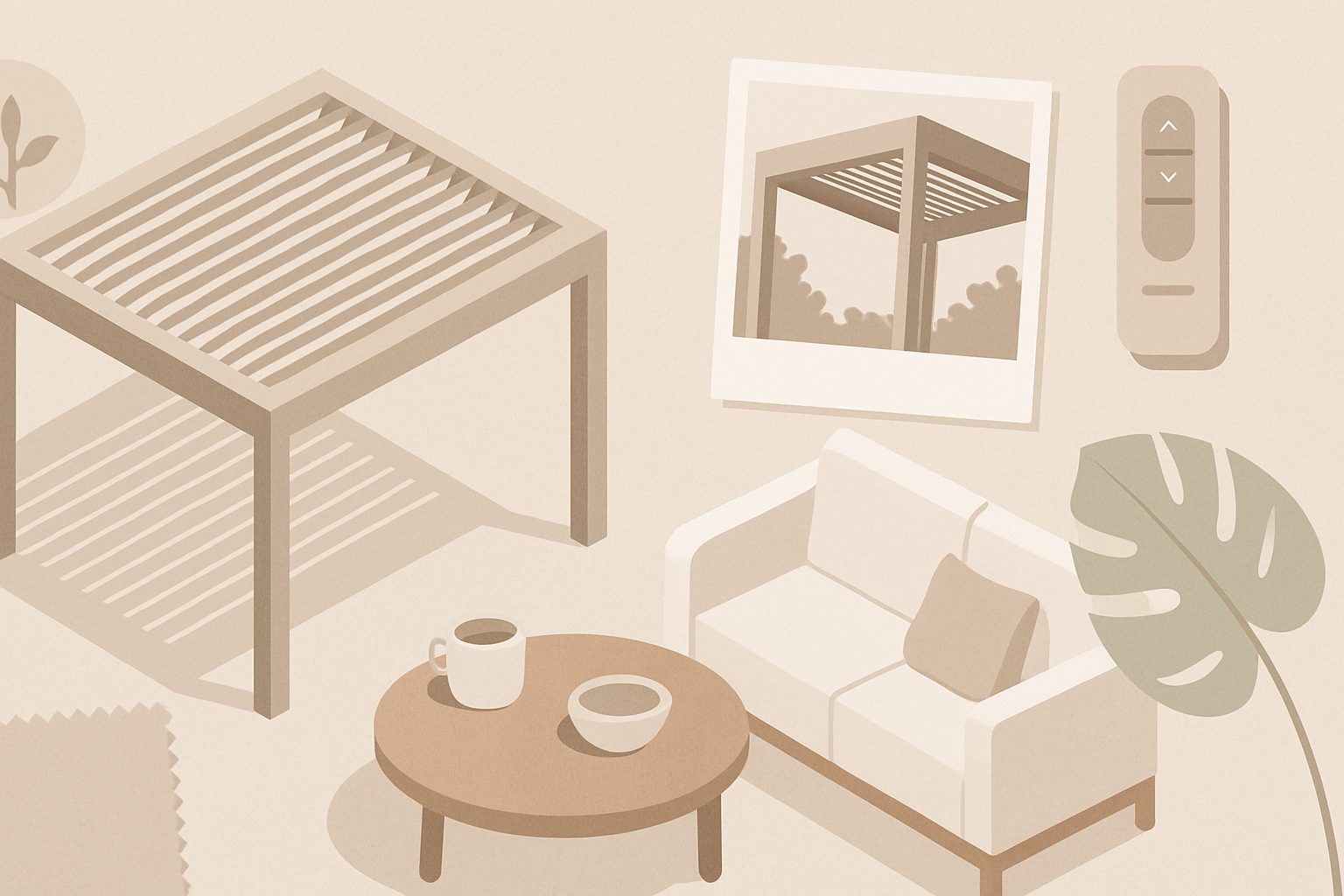
Best Motorised Pergola for a Small Patio UK (2025): Compact Models That Deliver
Small patios are tricky. You want the shade and shelter a motorised pergola offers, but you don't have the space to spare. A bulky installation will overwhelm your garden, eat into your usable area, and look disproportionate. The good news: compact motorised pergolas exist, and the technology has matured enough that smaller units deliver genuine reliability—you're not compromising on build quality just because the footprint is modest.
This guide focuses on models and setups that work within a 4 m × 3 m footprint, covering what actually matters for small-space installation: planning constraints, freestanding versus wall-mounted trade-offs, and how to get a usable system without breaking the bank.
Size matters more than you think
The difference between a 3 m × 3 m pergola and a 4 m × 4 m one isn't just the extra square metre. It's the difference between a patio that still feels like yours and one that feels like a shade structure someone installed in your garden. For a small space, perceived proportions matter as much as actual dimensions.
Motorised pergolas under 4 m in length are still long enough to cover a decent seating area—a small dining table or lounge arrangement—without dominating the view from the house. Height matters too: anything from 2.4 m upwards feels adequate; going beyond 3 m in a confined space can create a cave effect that defeats the point of being outdoors.
Aluminium frames are standard now and worth the premium over steel. They're lighter (relevant for installation in tight spaces), corrosion-resistant, and easier to adjust if the ground settles unevenly—which it will, especially on patios with inconsistent substrate.
Freestanding vs wall-mounted: space and stability
Wall-mounted pergolas save floor space in one direction, which is valuable if your patio is long and narrow. They're also simpler to install and don't need independent footings in a second row. The drawback: they require a sound external wall (brick or render, mostly—some walls are too soft), and they commit you to a fixed depth. If you change your mind about where the shade starts, you're left with holes in the wall.
Planning permission is less likely for wall-mounted models because they don't increase your ground footprint, though this varies by location and local authority rules.
Freestanding pergolas give you flexibility: you can position them anywhere, rotate them if the sun angle shifts with seasons, and remove them if you move house. They do take up floor space all around, so they suit squarer patios better than long, narrow ones. Installation is more involved—properly set footings are essential, especially if you're in a clay soil area where ground movement is an issue—but you're not dependent on your house being cooperative.
For small patios, freestanding often wins if you're renting or uncertain about your long-term setup. Wall-mounted makes sense if you're committed to the location and your wall is solid.
Motor and fabric: the reliability factors
Don't cheap out on the motor. The difference between a budget brushed motor and a quality brushless one compounds over five or ten years. Brushless motors are quieter, more efficient, and don't require the same maintenance. On a small patio, you'll notice a loud motor every time you use it.
Fabric choice isn't just about aesthetics. Olefin and acrylic are the workhorses for UK weather: they shed water, resist mould, and don't degrade as quickly as polyester under UV. They're also the most repairable—if you snag a corner, it's an affordable fix. Motorised pergolas that cheap out on fabric often need the cover replaced within three years.
Check whether the motor and fabric come with independent warranties. A five-year frame warranty is standard; motor warranties vary from two to ten years depending on the brand and installation quality.
Planning and neighbours
Before ordering, check if you need planning permission. Rules vary, but generally: freestanding pergolas under 2.5 m height and not covering more than 50 % of your patio floor area often sit in a grey zone that doesn't require permission. Wall-mounted structures are typically exempt if they're attached to your own wall. However, if your pergola is highly visible from the street or in a conservation area, the council might take interest regardless.
Even if you don't need permission, letting neighbours know you're installing something is good manners. A motorised pergola with its opening and closing routine can be conspicuous. If your patio directly overlooks theirs, a quick conversation prevents awkwardness later.
Budget shortlist and accessory bundles
Prices for compact motorised pergolas range from £3,000 to £12,000 installed, depending on finish and motor specification. Most reputable suppliers offer freestanding 3.5 m × 3 m models with brushless motors and decent fabric in the £5,000–£8,000 range.
Smart budget moves: buy the base pergola without premium fabric, then upgrade the cover separately after installation—replacement covers are much cheaper than including them upfront. Many suppliers offer covers in standard sizes for £400–£800, whereas the bundled version costs 30 % more.
Motorised louvre shutters are a tempting add-on but expensive. If your budget is tight, go with retractable fabric and skip the louvers. They serve a similar purpose and are infinitely easier to repair.
The bottom line
A small motorised pergola works best when it's right-sized to your space. Oversizing it to squeeze an extra metre of shade will make your patio feel cramped; undersizing it means you'll use it less because you'll feel exposed. Measure twice, involve the surveyor, and don't be swayed by the salesman's suggestion to go "just a bit bigger"—you know your space better than they do.
Freestanding or wall-mounted depends on your wall quality and how permanent you want this to be. Either way, invest in the motor. Everything else can be repaired or replaced; a dodgy motor means a pergola that's a frustration to use.
More options
- Motorised & Electric Pergola Structures — Amazon UK (Amazon UK)
- Electric Outdoor Patio Heaters for Pergolas — Amazon UK (Amazon UK)
- Weatherproof LED Strip Lights for Pergolas — Amazon UK (Amazon UK)
- Somfy & Pergola Motor Control Systems — Amazon UK (Amazon UK)
- Garden Pergola Structures & Accessories — AWIN (Primrose / Harrod Horticultural) (Amazon UK)